Follow The WPI Podcast on your favorite audio platform
E38: Preparing for College | Paul Reilly – Academic Advising | Raghavan Rajkumar '27 – Computer Science and Data Science
In this episode of The WPI Podcast, we explore ways that students who are getting ready to start college, at any institution, can manage the transition so they’re prepared to succeed academically.
Paul Reilly, assistant dean of student success, and Raghavan Rajkumar, an undergraduate student in computer science and data science and a former summer transition assistant, share practical advice for steps students and their families can take in the summer before college classes begin.
This episode also offers specific guidance to incoming WPI students to help them start strong, discussing what the university does to help students prepare for and navigate their first-year.
Related links:
Transcript
Cain: Getting ready to start college is exciting and a little scary too. There's honestly all the feels. But don't worry, The WPI Podcast is here to help. On this episode, you'll get a deep dive on how to manage the transition so you're prepared to succeed academically. Hi, I'm Jon Cain, and this is your home for news and expertise from the classrooms and labs at Worcester Polytechnic Institute. In this episode, you'll get some practical advice on what you can do in the summer before you start college, and you'll learn about what WPI does to help incoming students navigate the weeks leading up to the first class and the first few months that follow Later in the show, you'll hear from a WPI student who is one of the first some incoming students will meet. He'll share a student's perspective on the transition. But first, let's start with Paul Reilly. He's the assistant dean of student success at Worcester Polytechnic Institute. He leads the advising team in WPI's Office of Academic Advising. Paul, thanks for being on the WPI podcast.
Reilly: Yeah, happy to be here. Thanks for having me.
Cain: Well, Paul, I know everyone's journey to college is a little bit different. There's no one size fits all, but I'd really love for this episode to be kind of a guidebook of advice for students who are starting college in a few months. Maybe they're graduating from high school soon, or maybe they just graduated, and they've got the summer before classes to take some action. And I'm imagining that can be a really powerful time to prepare yourself for college so you're ready to go.
Reilly: You know, being prepared for that next step, a completely new adventure for students coming out of high school and, uh, and getting prepared over the summer is, of course, you know, one of the most important steps so they can start off strong.
Cain: So I wanted to talk about some of the most important things that families and students can do to take advantage of this time to prepare for that transition if they're a few months away from college. Uh, first off, there's programming that universities offer before classes start in a lot of cases. Why are those events and programs so important to participate in?
Reilly: I think first of all, the summer, you know, provides an opportunity for a pause, and this is, uh, you know, an incredible time for students as they transition from high school to college, no matter where they're going. So using that time just to, you know, reflect on what they've been able to achieve over their last 17, 18 years is just an incredible opportunity, and for families as well.
I mean, this is a you know, it's a full, uh, you know, a full group of people that have been, uh, supporting students on their career trajectory. So I think that's an important aspect is using the summer, and then of course, thinking about what that next step might be. So packing for a college, you know, doing all the fundamental things, buying laptops, uh, meeting people, and of course, these are the opportunities that colleges provide, like accepted students days or orientations that typically happen in the summer. So, you know, participating in those as, as much as you can as a student and as a family really kind of makes you feel that this is the next step in, in the experience, so that you don't just kind of roll into the, uh, maybe the orientation in August, uh, as, as unprepared as you may, uh, otherwise be, so.
Cain: Yeah, so those programming and events, they kind of make it real for people, right? And kind of focus the attention, I would imagine, on, on what's ahead and give them some opportunity to think and plan ahead, right?
Reilly: Yeah, I mean, it's an exciting opportunity. It's one of those times in a student's life and a family's life where they will reflect back on it in 20, 30 years, that, that step into college, what it meant- Uh, and I think, you know, for many of us who have gone to college, we, we can think back to what our feelings were at that time. And, and so having s- a support, a supportive environment both at home, but also in peers welcoming you to that institution, and faculty and staff, it just feels like it's a, it's a great next step in joining a new community.
Cain: As you're talking, I literally was capturing a picture in my head of, uh, the an accepted students day event or whatever they called it at the college that I went to, and, and sort of walking into that venue. So, uh, I, I think you're absolutely right. It does, uh, it carries with you for a long time.
Reilly: Yeah.
Cain: Paul, events and programs aren't the only way that universities connect with families in the months leading up to the first classes. What types of emails should students and their families be on the lookout for from whatever university their student might be going to?
Reilly: Yeah. Universities do a fantastic job of communicating key events and activities that are happening, you know, whether students are starting the institution or continuing. I think the, the most challenging part for students is that you get so many emails, and so thinking about what are those things as you begin college and as you, as you continue that you're gonna be most excited about learning. So that might be a club or activity when you're a current student, to the kind of onboarding activities that are important as you transition to a new environment. So, you know, uh, you know, there's certainly emails that are important, social media, uh, there's a lot of, uh, Facebook pages, Discords to welcome new communities, uh, into, uh, the, the fold. And so I think paying attention to what those emails are, making sure that you have got a plan for, you know, doing all the activities that you need to do before you start is, is important.
Cain: And how about advisors? How important is it for incoming students to, to connect with a, maybe an academic advisor, and what are the types of things that an advisor can help a student with early on, uh, and throughout their time at WPI?
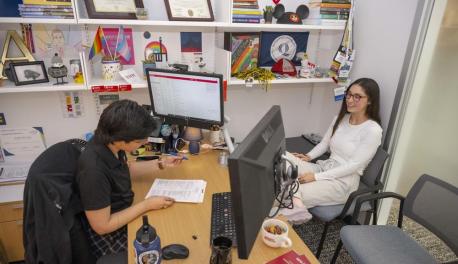
Reilly: I'm certainly biased. I've worked in advising for 22 years, and, you know, the academic advisor is one of the key people that a student will work with over their four years. So at WPI, we've got professional advisors as well as faculty advisors, and students work with the professional advisor in the summer before they start, uh, and they will work with that same person through their time. So we get to know students really well, uh, you know, helping them with course selection or taking advantage of other opportunities that they may be interested in, such as, uh, co-op opportunities or bachelor's-master's combined programs. But getting to know the students, the relationship is really crucial to that, and, and the more students engage with these resources early on, the richer the experience in college is going to be. So advisors are definitely important, and they're consistent. You know, they- you work with the same person. Uh, you know, you may be taking courses, but you may have different faculty members through, uh, your four years, but an advisor is somebody that you can, you can connect with. Uh, I had about six student meetings this morning. It was fantastic. Students are all doing exciting things as they lead into summer.
Cain: You know, Paul, we talked not too long ago as we were preparing for this interview, and you offered some tips that we're talking about today, and your next tip, this one kind of really surprised me because it's so obvious, but it didn't occur to me at all. You recommend that, uh, the student and the family have a conversation about how they'll communicate once classes have begun. What's, what's that all about?
Reilly: Yes. Uh, you know, when I went to college, it was certainly different in regards to communication, and, you know, nowadays there's so many opportunities, uh, cell phones and texts and, and, uh, social media and, and different formats. You know, a friend of mine actually gave me this advice, and he had a, his son was in college at the time, and he said, "The best thing we've done is just set up a weekly check-in, a weekly phone call." And, you know, when the student is driving when that happens, I mean, it certainly can be a really rich experience, uh, for everyone, and it is very different in college. Uh, if your student is living on campus, you may not be probably seeing them every day, and so having communication on a, on a consistent basis is good for the student and good for the family as well. So, you know, I encourage families just to have a conversation in the summer. Try to, you know, schedule a time that it may be, uh, advantageous for everyone to connect, maybe Sunday afternoon, and then have the student drive that, you know? And so whether it's a FaceTime or it's a, a phone call, and, you know, reset every week. You know, ask, "How are things going? What has been the best part of your week?" For students, I think it gives them the independence as well that, uh, they don't have to communicate on a daily basis, which is really important to developing in college, so. And maybe not every week you're able to connect and having that flexibility in place if things come up. But having some form of a structure, I think helps everyone.
Cain: Better to figure it out in advance?
Reilly: Yeah, I mean, if you can have the conversation in the summer, which most of the time we don't think of these things until we're actually in the middle of it, but that allows everyone to kinda get on the same page of what communication is going to look like in college. That conversation should happen, you know, July, August, before everyone gets to campus and then things are very busy for everyone.
Cain: So you've had some great general advice here for anybody. I, I wanted to get a little bit specific now to WPI. Uh, I wonder if you could sort of walk us briefly through the timeline. If you're accepted to WPI in the springtime, what happens between that acceptance notification and your first few weeks of class in the fall? What are the key milestones?
Reilly: Yeah, I mentioned that we do Accepted Students Days in April, and they are kinda big picture, high level, uh, programs that bring students who have been accepted to WPI to our campus, and they hear from our president, our deans, as well as departments. And, and they're able to go on lab tours and, and do those kinds of activities. After that, we do something called First Year Welcome Experience, and those are events in June that we have about nine different days in June where students and families will come for one day, and they will participate in programming, separate programming for students and families, and they will get to meet with their advisor. They will get to meet with some faculty members and work in small groups together. So we're starting to really get to know the students and, and start to plan for the fall, uh, semester. In addition to that, there are emails that will go out from the institution July and August, uh, key dates, key information that families need to be aware of. And then our new student orientation in, in August just before classes begin. That is two to three days of programming where students, uh, get connected with their classmates. They've maybe moved to campus, and it's a lot more in-depth programming just so they're ready to, to start classes. And then after that, we have our first year, uh, uh, Insight program where students will meet with a faculty or staff member once a week through the fall semester to make sure that they're, uh, transitioning successfully. So it's kind of a comprehensive developmental step from accepted students day all the way through the summer and into the fall semester.
Cain: Yeah, you can see the progression building as folks get closer to starting. I wanna talk a little bit more detail on some of these. Uh, so let's talk a little bit about the first year welcome experience that you mentioned in June. Um, this was not something that I had when I went off to college, and I, I think some folks might be surprised that WPI is engaging new students a good couple of months before the first class. Can you talk a little bit more about what happens at the First-Year Welcome Experience and, and why WPI offers it?
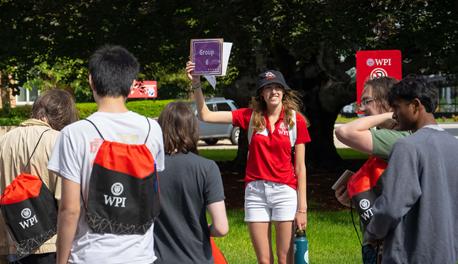
Reilly: Yes. You know, back in 2022, uh, c- I had an idea that we wanted to bridge something from Accepted Students Day all the way until August. And there was a few things that we were doing this summer, but we saw an opportunity to do something in June which would get students to campus, have them connect with their peers, maybe meet future roommates. And, you know, and having the institution's support, we were able to launch that program in 2022, and it's been going incredibly successful since then. So we normally have about 900 to 1,000 students that will come to campus in June, and we also offer some remote sessions as well that students cannot make it to campus. So on that day, students will, um, join us. They will hear a kickoff from our dean of undergraduate studies or our president. We will have them work in groups of 10 to 15 students, and we have about 100 to 150 students on each day. So they will do, uh, fun social activities. They will meet with their academic advisor. They will get to eat in the dining hall, which is an awesome opportunity, and then hear from our faculty in courses like our Great Problems Seminar, as well as our physics and our chemistry courses as well. So it's really another introduction to WPI, but at a smaller level where they're actually starting to build some relationships with some of their key people. In addition, families will also have their separate orientation. They will hear more about the curriculum. They will hear from our faculty members, and they'll also get to eat in the dining hall as well. So, you know, we like having the separate programs. We also like building in some consistency that both the student and the family members have so they can have, have some fun things to talk about on the way home.
Cain: Is there an element as well in terms of helping students register for courses?
Reilly: Yeah, so having advisors work with students during first-year welcome experience is, is great because our flexibility, uh, in the curriculum, uh, is something that WPI, um, really values. And so students can actually start anywhere in our curriculum, but there's some recommended pathways that advisors have the experience in sharing their knowledge. So we work with students during their time at first-year welcome experience. They will meet with their advisor. It's a great opportunity to start their relationship. And we have modules online that students can also, uh, look up the different components of our curriculum. In addition, our parents who are joining us will also hear about the WPI curriculum 'cause starting from the humanities and arts requirement or social science requirement all the way through the major and distribution requirements.
Cain: Yeah, it's great to have that jumpstart, so, and a little bit of support to help picking those courses and making sure that you're on the right pathway. At the First-Year Welcome Experience, new students, they'll also spend a lot of time with a current WPI student, and they're called Summer Transition Assistants. I'm wondering if you can tell us about this role and what they do during the First-Year Welcome Experience.
Reilly: Yes. When we started the program, we knew that having students involved was gonna be absolutely essential to its success. And so we hire about 10 or 11 Summer Transition Assistants who are sophomores, juniors, or seniors, and they will work in small groups with the students who are joining us. And so that is a great opportunity for them to share their expertise, uh, and things that I would not be as knowledgeable in, you know? Coursework that they may be taking, where's the best place to study on campus, uh, you know, dining tricks and, uh, tips. And so there's lots of great things that our students are experts in, and so making sure that they have, um, the space and the opportunity to connect, um, with the incoming students we felt was really important. We've had a number of students who actually have done it and have returned, and they are really heavily involved in the June, um, First-Year Welcome Experience. But they also continue to be available in the rest of the summer if students have questions.
Cain: And coming up in a few minutes, we'll meet a student who's been a Summer Transition Assistant to get his take on getting ready for college. For now, though, let's continue the conversation with Paul, and let's move the calendar forward a bit to those first few weeks of school. Um, WPI has the First-Year Insight program, as you mentioned, Paul. Um, what does that provide for new students?
Reilly: Yeah, this is a, a fantastic program. It's our first-year program that introduces students to our community. And so what we do, and actually we're doing something different this year, we have run the program in the past where students, uh, participate kind of in a hybrid, uh, format. This year we're moving it to an in-person classroom experience. We have been trying this out for the last number of years, and the in-person experiences, uh, students have loved them. And so having consistency where students can meet in groups of 20 to 25, uh, with a faculty or staff member through the fall semester just allows them to be able to ask questions, get connected. Uh, we also have our community advisors, which are students that will be a part of that, uh, experience. So having faculty, staff, as well as students supporting incoming students has really helped students kind of thrive in their first semester at WPI. So Insight program students actually get, uh, wellness and physical education credit for the program, which is one of our degree requirements. So it's a great opportunity to start that and to get connected with other students. So whether you're living with those students or you may not have met them yet, Insight brings a small group of students together in a very, uh, structured and developmental way.
Cain: I think you mentioned they meet once, once a week?
Reilly: Yeah, once a week, and so for one hour. So this is a, just a way to kind of reset, talk about what's upcoming that week. I mentioned about, you know, email and having good email, uh, management. So students will bring-- Our community advisors will talk about upcoming events, activities, maybe it's the clubs and activities fair. They can bring things into the classroom so students are aware, and be able to deliver that information both in an email format as well as in person, help students just to continue to stay engaged.
Cain: So I think what we're seeing here is a pretty dedicated and strong on-ramp to the university and, and, uh, and now we're at the point where they're yielding into, into tra- merging into traffic, and they're continuing to get that support. All these programs seem to be building on each other, you know, introducing students to different resources, programs, clubs, offices that they can get involved in and, and reach out to. Um, and those are all things that are here to support a student through their entire time at, at WPI. Can you talk a little bit about the academic success supports that are available to students long after the new student programming and the incoming student programming ends?
Reilly: Yes. So certainly in the first year, first semester, there's a lot of opportunities for students to connect with one another, uh, with faculty and staff, and think about what is the array of things that WPI provides. But going beyond the fall semester, you know, each course has supplemental support in, in their course. We have tutoring available in first year and, uh, a lot of the sophomore courses. And then, of course, I mentioned earlier about the importance of having an academic advisor, and that person does stay with the student through their four years. So having those additional support systems, being able to introduce those in a very developmental way 'cause a sophomore student is very different than a first-year student in what they know about campus, and is very different than a senior. So, you know, being able to meet students kind of where they're at in regards to what they need, and the advisor's a great resource to say, you know, "Okay, you're interested in, uh, you know, advancing your career opportunities. Why don't we talk to the Career Development Center? Why don't we look if a co-op opportunity might make sense for you, uh, based on your curriculum and what you wanna study?" So having that con- continuous support system is really important to be able to kinda unlock the, the opportunities that can help students succeed academically.
Cain: A lot of what you've recommended today seems to have a common thread. There's a lot about making connections, uh, whether it would be with other students or with, uh, getting to know faculty and staff. Uh, why is getting to know faculty and staff and making connections there so important? And do you have any advice for somebody that's maybe a little bit shy about just randomly going up to a professor or a staff member and, and saying, "Hi, uh, I'm, I'm a new student. Uh, wanted to say hello"?
Reilly: Great question. Yeah, I m- universities are these ecosystems of connection, right? So students are in classes, they're connecting with their peers, they're forming study groups, they're living together, and also connecting with faculty and staff. So connection is really important. You know, I think for people that work in universities, faculty and staff members, they've chosen to work in a university for a very specific reason. They're excited about doing cool stuff, and they wanna work with students. And so I think for students, understanding that these are people that wanna work with me, they're excited to work with me. Advisors are proactive in reaching out to their students. So and I think that's really important. Uh, and also thinking that these are people that at one point were 17, 18 years old themselves, and they probably had similar concerns or struggles, and I bet they turned to other people to, to help them out. So understanding that there are people here to help students succeed, and also that, you know, it's important just to start, right? To take chances, to, to reach out, even if it's in an email format. The Insight program is really good about doing that, because what we do is we bring a faculty or staff member into that classroom format. So we start to lower the, uh, the nervousness about contacting a faculty or staff member as soon as the fall semester. And that works really well for our students. And students are, some students are shy and, and introverted, and that's what the advisor can help students with, how to navigate that system.
Cain: And what have you found for those students that do make those meaningful connections, uh, with, uh, faculty or staff? What does that open up for them? What's the power of having, uh, some significant contacts with a faculty and staff member over the course of your time at the university?
Reilly: There are probably very specific things like opening up research opportunities with a faculty member that you may connect with in the classroom or they may be your faculty advisor. Faculty members may know what's happening in the industry and maybe career opportunities or how things are shifting. Advisors can help open up opportunities such as I mentioned earlier about co-op opportunities or bachelor's/master's combined programs, which are really popular nowadays. There's a full landscape. There's a full, uh, opportunity to, to do things that you may not have known you were gonna do. And so, but if you don't try things or take chances, uh, you, you won't know what those things are. So I think WPI does that really well where we try to embed flexibility into our curriculum, and we don't have failing grades. So students can try things, they can explore things, and they can get connected with faculty members that are maybe doing research that they're really interested in. Uh, and that's what being at an institution like WPI allows the opportunity to connect with faculty members in a very personalized way where you're doing one-on-one research with a faculty member. That is very different than a bigger institution.
Cain: And you've talked about some of the different supports available. Maybe if a student is, is struggling with something academically and they need help, I think every single one of us has had that experience where we're feeling like we're falling behind, but we're afraid to ask for help. We're not sure if that's the right step. If you could speak directly to someone that's listening to this and, and, and thinking about that, you know, maybe they know that there's tutoring or maybe they know they could go talk to, um, their professor, but they're just, you know, afraid maybe to admit that they're falling behind or struggling. What advice would you give them as they're processing that decision?
Reilly: Yeah, college is a, is a different experience than it was in high school. So you may not, uh, have had the need to get tutoring in high school, but it's very different in college. And if you can find a friend, right? Find every opportunity that you, that you need in order to help you get the help you need. So whether it's talking to an advisor, it's finding a group of students that you can go to a group tutoring session on, or it's connecting with a faculty member in the classroom maybe after, after the class ends and talking about the material. Every opportunity that a student can do is going to help them, uh, be successful. We, we used to talk about, uh, kind of the nine words at WPI, uh, go to class, do the work, and ask for help.
Cain: Mm-hmm.
Reilly: And it, it was always the last three that we were primarily focused on, was asking for help. And it was very intentional why those were important, because we also know that our students will have difficulty actually doing that. So encouraging students to ask for help. We're here to, to help them out no matter what the questions may be, and we've got a really good community of students that are supportive of one another, that collaborate on projects, and that wanna lift one another up.
Cain: Ask for help. Great advice for any, any stage in life, truly. You know, I wanna ask you about another aspect of the college transition, especially at a STEM school like WPI, math is really important. Uh, students might be coming in though with different levels of experience and skills in math. What do you recommend in terms of being ready for college math?
Reilly: Uh, concerning to speak about WPI, we have what we call a math placement test. It's actually a recommendation test. Sounds like a, a scary word. But it gives a recommendation for our students can start in our calculus, uh, sequence, and that's really important. It's calibrated with the courses so that students will be successful based on where that recommendation goes. They take it typically in May, June, before they come for first-year welcome experience, and then the advisor can sit down and they can talk about the score that they got. It is not a binding test, so if a student decides, if they've tested into, let's say, Calculus 2, but they wanna start in Calculus 1, they can absolutely do that. They can also go higher if they wanted. We always have a conversation with the student just to get a sense of like what might be an appropriate place to start, and so that is really important. It gives a really strong recommendation and guide for where students should start. And of course, we want students to be successful, right? So, uh, and what we've seen is, you know, the research shows that students who start with the recommendation typically do better. So starting there, you know, w- what do we recommend based on how students do? And then building in the time early in the term for supplemental instruction. Maybe it's a one hour a week of tutoring. You know, doing that as soon as the first week rather than waiting until you struggle is a good proactive thing to do. And if you can find other students to engage in that material, beginnings are really important, so the stronger you can start off in the first week, it's gonna continue, and you'll build momentum based on that. And, you know, just looking through the, you know, material, maybe even over the summer, you know, if you're thinking about starting in a, a calculus course or if you're at a different institution and starting in a different math course, a little bit of a refresher might help. So maybe an online course, maybe just looking at high school textbooks, just to kinda get yourself into that frame of mind before you start.
Cain: Paul, as we're wrapping things up, we've talked a lot, and you've given a lot of great advice to students to help them manage this, and, you know, it, it could still be a little scary for folks as they're looking at making this transition. Are there any sort of, uh, words of wisdom that you wanna leave people with as they're looking at making this transition, uh, to give them the confidence that, uh, you've got this, uh, and you can, you can make this transition successfully?
Reilly: It's a combination of being incredibly informed about where you're going to go and, and participating in all the opportunities that the institution is providing, so all of these accepted students days, these new student orientation events, and then taking a leap. You gotta go with your gut instinct a little bit and feel that this is the place that, you know, a student would wanna spend four years at. And if things change, they change, right? And being able to have supportive, uh, systems in place and people in place that can help you with those decisions. So I think, yeah, being informed, and then at some point you have to kinda get beyond the information. You've gotta feel that the next step, you're, you are ready for the next step. I think for students, just recognizing that they've got incredible strengths as they start a new environment, and that can be, uh, challenging for them to think about. Uh, you know, what is it, what is it gonna look like as I join a new, uh, peer group? But they are incredibly talented. They've been incredibly successful in, in high school. So just making sure, you know, as they choose an institution, you know, what is that place that can lift them up? You know, being surrounded by peers, faculty members, staff members that can recognize their strengths and that can help them grow, you know, in their time at the institution. So, you know, taking a pause in the summer, think about what they're really good at and, and giving themselves a pat on the back. There's been a, a big achievement so far in regards to what they've been able to do in, in high school, and that is only gonna continue in college.
Cain: Great. Well, Paul, thanks so much for sharing your advice and explaining how WPI supports students who are transitioning to college. It's been great to have you on The WPI podcast.
Reilly: Great. Thank you.
Cain: Paul Reilly is the assistant dean of student success at Worcester Polytechnic Institute. I wanna bring in now a student perspective on the college transition. Raghavan Rajkumar is in the WPI class of 2027. He studies computer science and data science. He goes by Ghav. He's also been a summer transition assistant for WPI's welcome experience, helping incoming students. Ghav, thanks for being on The WPI podcast.
Rajkumar: Thanks so much. I'm happy to be here.
Cain: Now, you did this college transition not too long ago. I'm wondering what advice do you have for that summer before college and the first weeks of college in the fall, regardless of whether a student's planning to come to WPI or any other school?
Rajkumar: Yeah, I'd say my main bit of advice is obviously you gotta stay on top of all the stuff the school sends you, whatever school that is. They're gonna have you do pre-orientation stuff and then orientation stuff. But more than that, make sure you're, you're spending time with your friends from high school. Make sure you're, you're spending time with your family. This is the last time you're really gonna be living with them, so enjoy your time.
Cain: So specific for those students coming to WPI, I'm wondering what advice you have. What should they be doing during their summer before move-in here at WPI?
Rajkumar: There's a bunch of stuff you gotta stay on top of, the biggest one being making sure that you attend a first-year welcome experience. It really helps you connect with the campus, connect with the students, and connect with the academics here in a way that you won't get if you don't experience it. During that day, you're gonna have a bunch of activities with fellow admitted students, whether that's signing up for your classes, going to a bunch of presentations on what WPI's about. It just gives you a better understanding of what school that you're coming to, and it's just a, a good experience to meet people. Even if traveling to WPI isn't feasible for you during the summer and then having to travel back, there's also virtual info sessions available for the first-year welcome experience, which will still have that same structure of having a summer transition assistant. It'd be all the same summer transition assistants just sitting on a Zoom call, making sure that the students have the best experience. Even if they're not here on the ground, we're gonna make sure that they are still part of the first-year welcome experience and get that connection to WPI. Other than that, I would also do the math placement exams just 'cause those will help out, uh, figure out where you have to be for that First-Year Welcome Experience day, as well as joining the housing portal and setting yourself up there, figuring out whether you wanna meet roommates through Instagram, through Discord, or if you just wanna go random. All options are good, but it's good to stay on top of that.
Cain: Ghav, you've been a summer transition assistant, which we spoke with Paul Reilly a little bit about that role, but I'm wondering if you can tell me in your words what a summer transition assistant does during the First-Year Welcome Experience events in June, and what they do for students that are planning to attend WPI.
Rajkumar: We're a student leader that comes in and helps the admitted students to best transition into WPI. On the day-to-day, we'd meet the students. We'd give them a space to ask any questions. We'd run them through a typical schedule for WPI, you know, do some icebreakers, all that stuff. We'd then, uh, help them sign up for classes, which was something which was super important. We were always matched up with students who were within our major, so we were able to give them the best advice there so that they could succeed in the future. And in general, we were just a resource that if they had any questions, they could always reach out to us. We gave them our email so that if they needed to ask any further questions, they could also follow up with us and make sure that when they're coming to WPI, they're gonna not only understand stuff from the academic side, but also understand some more of the student life stuff, whether that's them asking us about clubs, organizations, stuff like that, or just random questions about like, "Hey, what's the best spot for food?"
Cain: I wanted to ask you a little bit more about the First-Year Welcome Experience events. What are the types of info sessions that are available to the new students?
Rajkumar: Yeah, there were a few different ones that we ran through each day. The first one being a Great Problems Seminar info session that helped the students figure out what the Great Problems Seminar was, as well as finding some cool projects that they might connect with. Another one would be the housing presentation, where they got more information about where the different options for living on campus were, both for their first year and for the future as well. There was one about how to best transition to WPI in the fall, stuff like using an Outlook calendar, scheduling your stuff in advance, joining clubs and activities, stuff like that. And there was one that talked about course registration and the process they would go through later in the day to sign up for said courses.
Cain: Yeah. What does that process look like, uh, the support that students get to sign up for their classes?
Rajkumar: Yeah, so at WPI we obviously want students to challenge themselves and take whatever courses they want, but we also wanted to make sure to guide them so they wouldn't be tackling anything that was too difficult coming in. So we had a couple of different data points, the first one being the math placement exam. That helped us out a lot to figure out which calculus the student should take or whether they should skip calculus altogether. We also, being in their major, knew the best courses to take if we were in their shoes. So oftentimes I would speak about my experiences joining WPI, talk about the struggles I had. And general tips and tricks like that about how to look at Oscar for professor recommendations or which humanities classes were best fit for their interests. But it was all very individualized to make sure that the students themselves still had the agency behind which courses they were gonna pick.
Cain: And as you mentioned, the Great Problems Seminar at WPI, it's a two-term course that you can take in your first year at WPI. It's optional, but it, uh, it gives students the opportunity to immerse themselves in university-level research and sort of introduce them to the project-based curriculum that we have at WPI. So it sounds like a really busy day for you, these first year welcome experience events, and you've got a lot of students and parents around. I'm wondering what are the types of questions that you tend to get from students?
Rajkumar: At the beginning of the day, they might ask, like, some introductory questions like, "What's the hardest classes? But by the end of the day, since we're a student, they feel more comfortable asking us questions that are more loose or relaxed, whether that's about like what are the social events on campus, what is, uh, Greek life about, what is ... what professors should I take classes with, stuff like that, and asking for personal recommendations more than an administrative viewpoint.
Cain: For sure. And I'm wondering, what type of feedback did you get from students about the first year welcome experience events and about you being there as a summer transition assistant available to them? What was, uh, what did you hear from the students, you know, maybe at the, at the end of these days?
Rajkumar: Yeah, so at the end of the day, they're always super appreciative. It also helped we had a little ice cream social at the end of each day, so they'd come in, get their ice cream, and we'd have a opportunity to chat not only with them, but also with the parents. So there was always some good questions asked there. And no matter what, every day they just always were appreciative of having a student there to help them. Oftentimes it's easy to, to see a institution from one way from the tour guide and the admissions counselor view of it, but having a student there to help them as well who's separate from that made it so that they were able to ask more questions about what student life at WPI was like and more mentorship type questions about stuff they might not feel comfortable asking a staff member at WPI.
Cain: And what did you enjoy most about being a summer transition assistant? It, it's obviously a big commitment on your part to, to give up part of the summer to, uh, spend some time doing this, so I'm kinda wondering what you took away from it.
Rajkumar: My favorite part of it was meeting all the new students and then seeing them again on campus, and some of them will come up and be like, "Hey, you were my summer transition assistant." That was a cool experience. And, uh, I really liked at the end of each day, like we mentioned earlier, they would come up, be super appreciative, and you could tell that they felt a lot more confident in their choices after coming to a first year welcome experience day. And the ability to be a part of that was definitely something which I, uh, which I enjoyed a lot.
Cain: Ghav, thanks so much for being part of The WPI podcast and sharing your experience as a summer transition assistant and giving some advice to incoming students, uh, wherever they go to school.
Rajkumar: Yeah. Thanks so much, Jon. It's a pleasure to be here.
Cain: Ghav Rajkumar is a computer science and data science student in WPI's class of 2027. My thanks again to Ghav and Paul Reilly, who joined us earlier. They shared some really great advice, and I hope it helps you if you or someone you know is getting ready for college. So thanks so much for listening. I invite you to follow The WPI podcast wherever you get your podcasts. You'll also find us on wpi.edu/listen. On that page, you'll find other podcasts from across campus and WPI News on the Go. That's a collection of audio versions of stories about our students, faculty, and staff. You can keep up on everything happening at WPI by asking Alexa to “open WPI”. I want to thank computer science and music undergraduate student Aster Dettweiler for the audio engineering help on today's episode. And please join us next time for another episode of The WPI Podcast. I'm Jon Cain. Thanks for listening.